
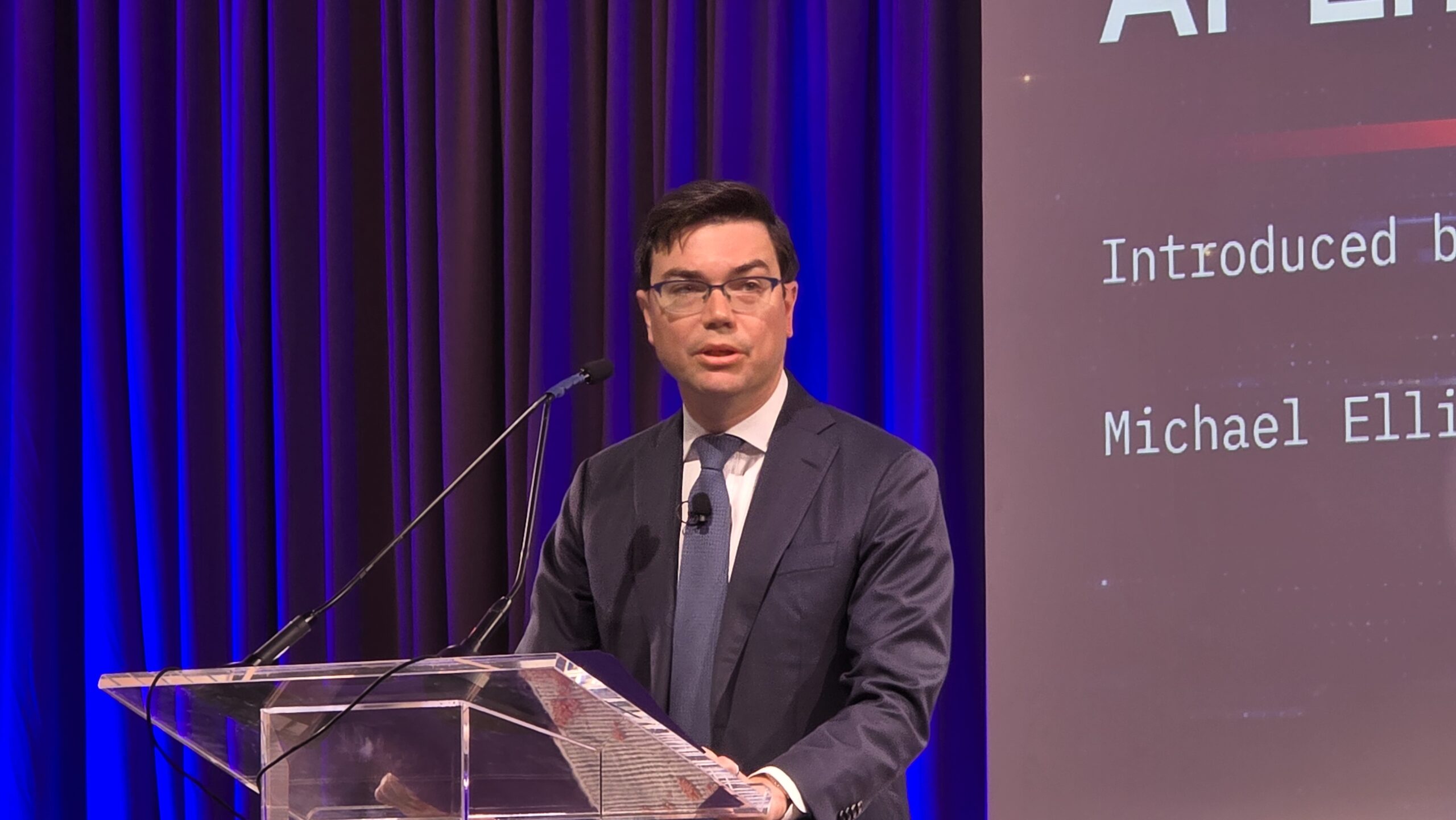
In the hushed, high-stakes corridors of the Special Competitive Studies Project (SCSP) summit, Michael Ellis, Deputy Director of the Central Intelligence Agency (CIA), delivered a briefing that felt less like a standard government update and more like a tech keynote from the bleeding edge.
As a technologist, listening to Ellis, the youngest person to ever hold his office, was a revelation. We aren’t just watching the CIA use AI; we are witnessing the agency’s transition into an AI-native intelligence service. From the “Corona” satellites of the 1950s to the LLMs of 2026, the blueprint remains the same: pairing clandestine mission requirements with the raw, iterative power of Silicon Valley.
The Macro View: The Industrial Revolution of Intelligence
Ellis framed the current shift as a “global technological transformation” on par with the Industrial Revolution. In the macro sense, the CIA has moved past the experimental phase. In 2025 alone, the agency managed over 300 AI projects.
The most significant strategic takeaway? The “AI race” and the “China challenge” are now officially considered the same priority. Ellis was blunt: China aims to surpass the U.S. as the dominant AI power by 2030, leveraging a “whole country” approach that ignores individual rights to fuel its models. For the U.S., the strategy is a “Sprint-Marathon” hybrid: a sprint to mold the immediate global architecture of AI, and a marathon to ensure democratic values remain the foundational code of the future.
The Micro View: AI Co-workers and the End of Red Tape
On a granular level, the “future of work” at Langley looks remarkably like the most advanced dev shops in the private sector. Ellis detailed a roadmap where AI shifts from a tool to an autonomous mission partner within a decade.
Key Operational Milestones:
- AI Co-workers: Within two years, every analytical platform will have classified Generative AI built-in to draft judgments and edit for tradecraft.
- The First AI-Generated Intel Report: Ellis revealed that the CIA has already successfully produced its first-ever intelligence report generated by AI, a milestone for the Directorate of Operations.
- Triage Agents: Automated agents are now scanning massive data streams to flag “confidently wrong” or outlier patterns that humans would miss, effectively acting as a first-line filter for human analysts.
Notable Insights from Deputy Director Michael Ellis
“The battle of cybersecurity will be a battle of artificial intelligence… Whoever designs and capitalizes on the best AI models will wield enormous power.”
“We cannot allow the whims of a single company to deprive CIA from using AI tools… we should not fall into the trap of thinking that a single company possesses a significant advantage over others.”
“China views AI dominance as a way to secure a technological economic advantage… It wants the world to operate on a Chinese developed architecture. We can’t let that happen.”
The New Acquisition Framework: Speed as a Target
Perhaps the most “clever” part of Ellis’s strategy is the administrative overhaul. He announced the CIA Acquisition Framework, which utilizes the agency’s unique statutory authorities to slash procurement timelines. The message to the tech industry was clear: “CIA is open for business.” By creating the Office of Corporate Partnerships, the agency is actively removing the “stovepipes” that once made government contracts a nightmare for startups. They aren’t just buying off-the-shelf software; they are inviting the private sector to solve “Hollywood-style” prototypes, customized AI solutions for the world’s most complex field operations.
The Adversarial Pulse: Quantifying the Threat
Directly addressing the competition, Ellis highlighted that China is aggressively “distilling” U.S. models, reverse-engineering our innovation to fuel their surveillance state. To counter this, the CIA hasn’t just increased its defense; it has increased its collection. In 2025, the agency doubled its tech-related foreign intelligence reporting and tripled its open-source reporting on emerging tech.
To put the scale of the challenge in perspective, consider the following data points on global AI adoption and demographics that influence the strategic landscape:
| Metric | Estimated Value (2025-2026) |
| Global AI Users | ~800 Million (10% of world population) |
| CIA AI Projects | 300+ Active Initiatives |
| China AI Dominance Goal | Year 2030 |
| U.S. Tech Intel Reporting | 200% Increase (YoY) |
Final Takeaway
Michael Ellis didn’t just give a speech; he provided a manifesto for Assurance through Innovation. The CIA is betting big on the idea that human judgment must guide AI, but AI must scale human judgment. As we look toward the next decade, the “human-in-the-loop” model is evolving into a “human-on-the-loop” model, where officers manage teams of AI agents to keep pace with an adversarial OODA loop that never sleeps.
The future of intelligence isn’t just about who has the best spies; it’s about who has the best weights, biases, and compute. And according to Ellis, Langley is running at full speed to ensure those weights lean toward freedom.
For more information, please visit the following:
Website: https://www.josephraczynski.com/
Blog: https://JTConsultingMedia.com/
Podcast: https://techsnippetstoday.buzzsprout.com
LinkedIn: https://www.linkedin.com/in/joerazz/
Leave a Reply
You must be logged in to post a comment.