
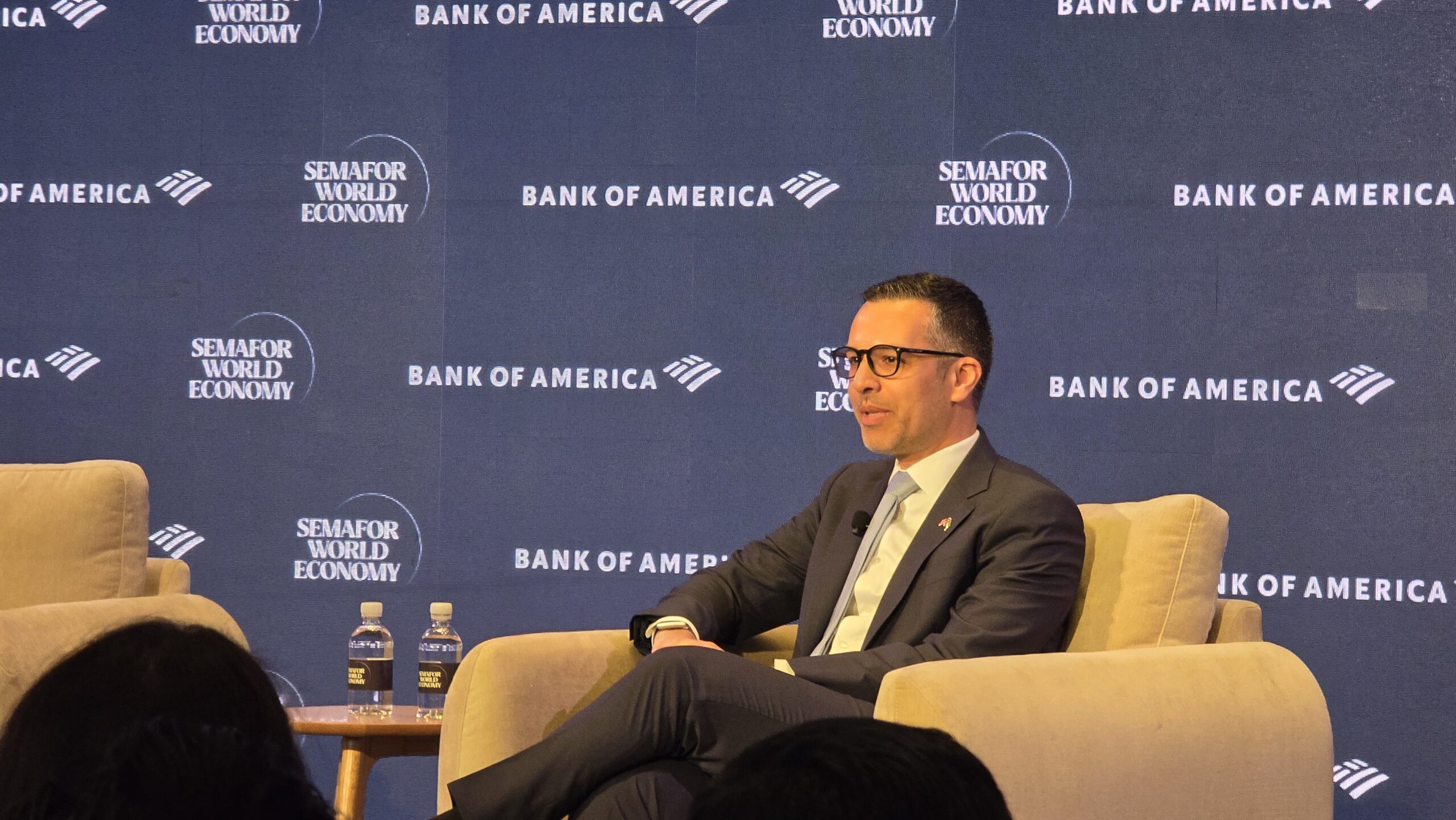
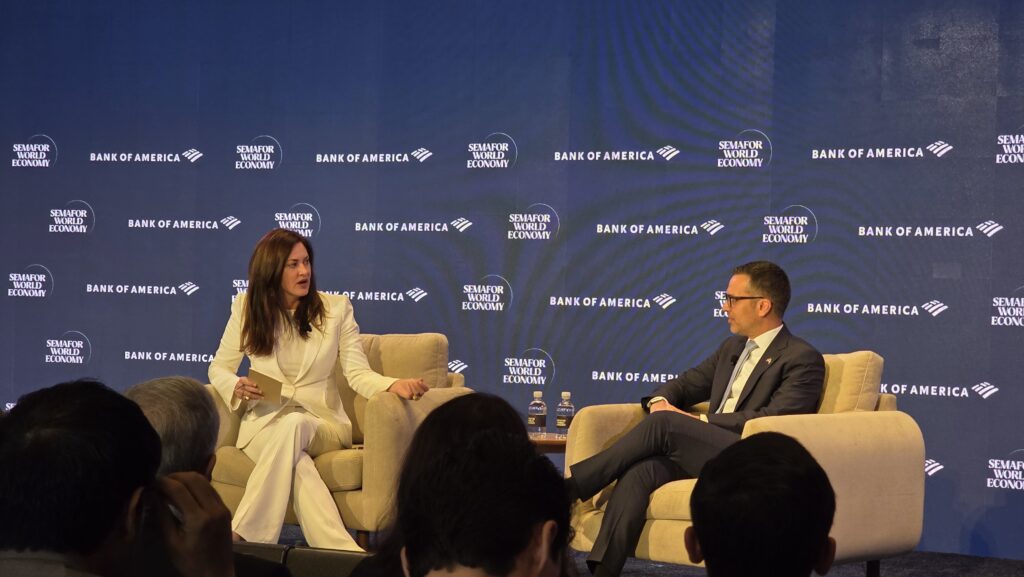
At the Semafor World Economy summit, held during the high-stakes World Bank and IMF Spring Meetings, a distinct narrative of resilience emerged from the Middle East. While the headlines of 2026 have been dominated by the kinetic escalation between the U.S. and Iran, H.E. Hadi Badri, CEO of the Dubai Economic Development Corporation, offered a masterclass in crisis management as a competitive advantage.
From a technologist’s vantage point, the session, moderated by Hadley Gamble, wasn’t just a discussion on finance; it was an exploration of how a city-state can leverage digital and physical infrastructure to maintain an “uptime” that defies regional volatility. Dubai isn’t just surviving the current energy and security shock; it is using it as a “forcing function” to accelerate its D33 economic agenda.
The Macro View: The “Speed Bump” Philosophy
H.E. Hadi Badri framed the recent aerial threats and the broader regional tension not as a derailment, but as a “speed bump.” For Dubai, the macro-strategy is built on extreme diversification. Badri noted that coming out of the 2008 financial crisis and the COVID-19 pandemic, Dubai learned that its greatest hedge against risk is the diversity of its source markets.
While certain tabloids whispered of an “exodus,” the data tells a different story. Dubai’s population grew by 7% last year, and its GDP by 5.5%. The city has moved from being a regional trade hub to a global “And” Economy. In a world increasingly defined by “us vs. them” or “A vs. B,” Dubai’s leadership has doubled down on a philosophy of radical neutrality: working with the U.S. and China, and serving as a safe harbor for over 200 nationalities.
The Micro View: 15-Minute Pizzas and 2,800 Interceptions
On a granular level, the session provided a visceral look at life under a high-tech defense umbrella. Badri highlighted the “surreal” nature of the current moment: while the UAE defense forces were eliminating 2,800 aerial threats over a 40-day period, the city’s core infrastructure remained untouched.
The Resilience Dashboard:
- Uptime Excellence: There was zero disruption in power, water, telecoms, or banking. “My 80-year-old mother still goes for her daily walk to the mall… we are still able to order Pizza and get it delivered in 15 minutes,” Badri remarked, emphasizing that the “psychological effect” is the only thing the government has to manage.
- FDI as a Proxy for Trust: Despite the tension, the U.S. remains Dubai’s largest investor, with 60% of that investment being M&A-related. This suggests that sophisticated capital isn’t just “staying the course”, it’s looking for long-term acquisitions in a market that has proven it can keep the lights on during a crisis.
- The Talent Hub: The “Golden Visa” program, once a COVID-era incentive, has become the foundational tool for a knowledge economy. Technology companies are increasingly domiciling in Dubai not just for the tax benefits, but for the security of a government that views itself as a platform for private capital.
Notable Insights from H.E. Hadi Badri
“Dubai is a place where you build. We are ‘new builders’, our skyline is a true definition of that. We’ve seen technology companies increasingly domicile here as a demonstration of the new innovation we are pushing.”
“Why can’t we be an ‘and’ economy, not an ‘or’ economy? Why do we have to pick A or B? We want to work with everyone to access partnerships, because partnerships allowed for the miracle of Dubai.”
“We use domestic spending as a proxy. The fact that we are only a few percentage points shy of where we were in February gives us the confidence that people are staying the course and investing.”
Infrastructure as a Service: The Role of Government
For the technologist, the most “clever” part of Badri’s presentation was his definition of government. He described the Dubai government’s role through three specific pillars:
- Digital and Physical Infrastructure: Providing the hardware and software on which the economy runs.
- Consultative Policymaking: Admitting that “the industry knows more about the industry than we do,” and writing policy based on direct investor feedback.
- Convening Power: Using the city as a neutral ground where global decision-makers can identify opportunities without the friction of traditional geopolitics.
The Geopolitical Pivot: The Iran-UAE Trade Nexus
The elephant in the room was Iran. Badri handled the question of trade with a fluid pragmatism. While acknowledging the trade ties of the past, he emphasized that Dubai’s “playbook” is to fill any gap left by a declining market with a new one. Since pre-COVID, the number of countries providing Foreign Direct Investment (FDI) to Dubai has grown by 65%. This radical diversification ensures that no single regional actor can sink the city’s economic prospects.
Final Takeaway
H.E. Hadi Badri’s dispatch from the Semafor stage was a reminder that in the age of global volatility, resilience is the most valuable currency. Dubai is betting that by being the world’s most reliable “And” Economy, it can turn regional conflict into a forcing function for domestic growth.
As the schools prepare to reopen and families return from the Easter break, the message to global investors is clear: Dubai isn’t just “okay”, it’s accelerating.
For more information, please visit the following:
Website: https://www.josephraczynski.com/
Blog: https://JTConsultingMedia.com/
Podcast: https://techsnippetstoday.buzzsprout.com
LinkedIn: https://www.linkedin.com/in/joerazz/
Leave a Reply
You must be logged in to post a comment.