
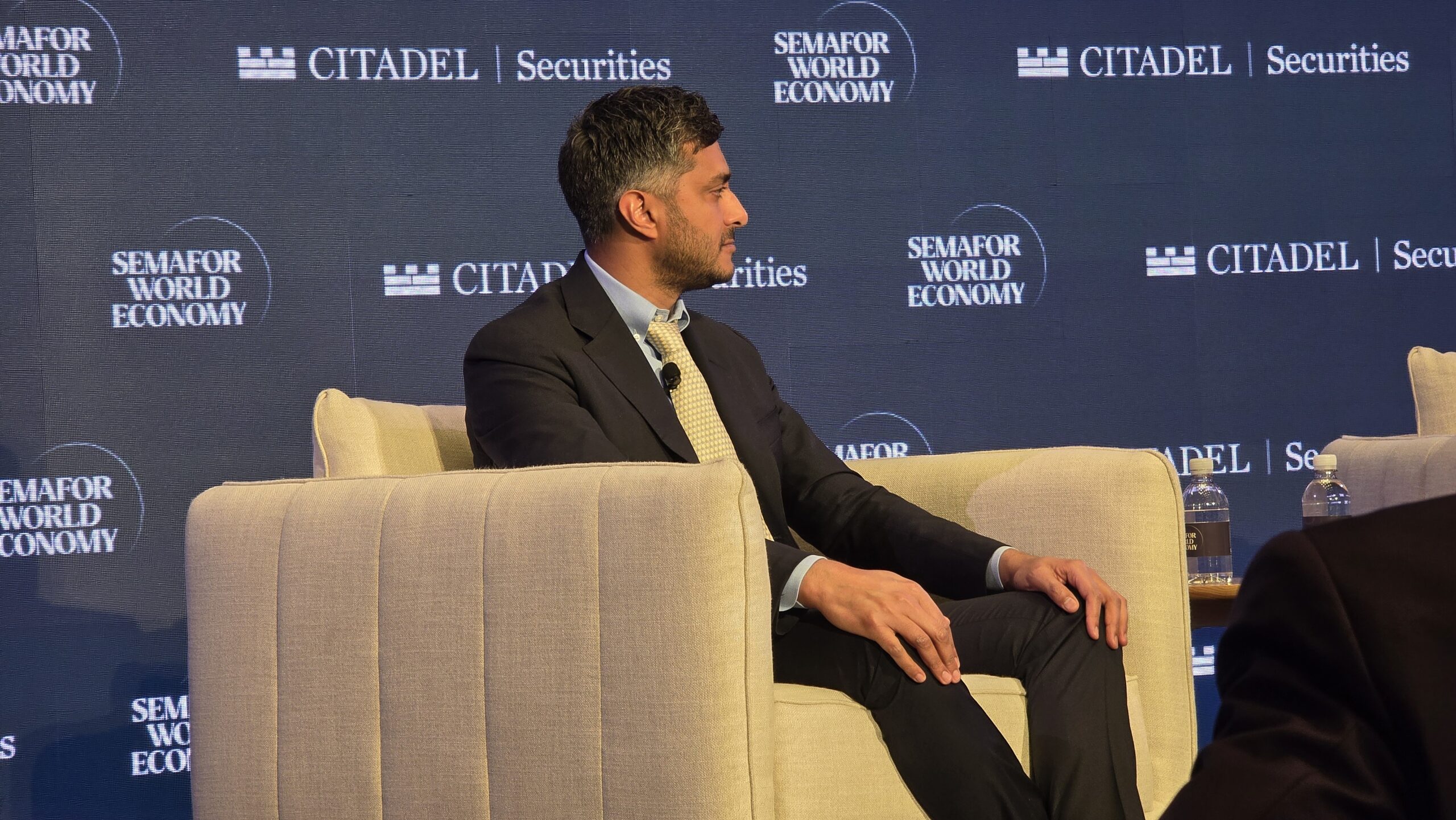
At the Semafor World Economy summit, nestled within the broader discussions of the World Bank and IMF Spring Meetings, the “Future of Capitalism” session took a sharp turn into the digital deep end. Arjun Sethi, Co-CEO of Kraken, sat down with Semafor’s Rohan Goswami to dissect a global financial landscape that is being re-architected in real-time by decentralized finance (DeFi), artificial intelligence, and a shifting regulatory “jagged edge.”
From a technologist’s vantage point, the discussion moved past the tired “crypto vs. fiat” debate and into the realm of institutional-grade synthetic products and the urgent need for a “scaffolding” that allows for both innovation and consumer protection. We aren’t just digitizing money; we are witnessing the birth of a global, 24/7 liquidity layer that functions more like a professional sports league than a traditional bank, where the “pricing of risk” is the only game that matters.
The Macro View: The Convergence of Synthetic Assets
Sethi framed the current state of global finance not as a series of disparate “tokens,” but as a convergence toward synthetic financial products. The macro-economic reality is that the legacy “plumbing” of finance is brittle. We saw this with the regional banking tremors of late 2025 and early 2026.
In response, capital is migrating toward platforms that don’t exist on traditional rails. Sethi highlighted a ” Snapshot of monotony” in legacy systems that is being disrupted by a 20% surge in open interest for digital assets in just the last two months. For the global economist, this suggests that the “Future of Capitalism” isn’t just about who owns the gold, but who owns the most efficient exchange of value.
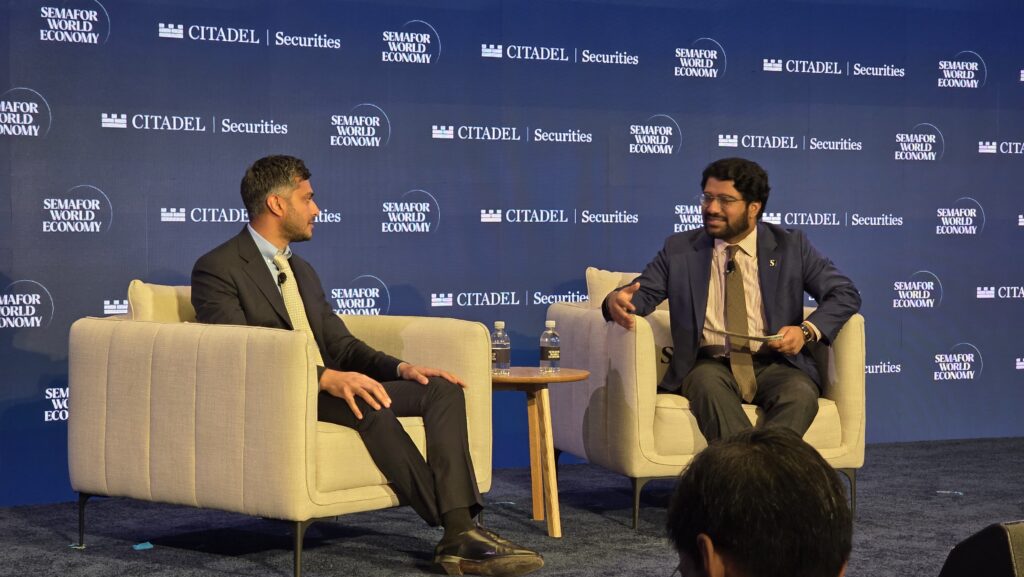
The Micro View: Kraken and the “Professional Affairs” of Risk
On a granular, operational level, Kraken is positioning itself as more than just an exchange; it is becoming a liquidity infrastructure provider. Sethi described a “weird office experiment” in the mix: merging the speed of a high-tech platform with the “hardened guardrails” of a traditional financial institution.
The Operational Shift:
- The Regulatory Sieve: Sethi was candid about the “ambiguity and honey” of the current regulatory environment. He argued that instead of trying to regulate the technology, we must regulate the actions. This is particularly true in the U.S., where a ” patchwork of state regulations” remains a significant drag on innovation.
- Institutional Scaffolding: Sethi introduced the concept of “Financial Profiles”, specialized wrappers that allow institutions like hedge funds and asset managers to participate in DeFi without violating their fiduciary duties.
- The “Sports League” Analogy: In a clever turn, Sethi compared the market to a professional sports league. You need clear rules, a level playing field, and transparent pricing. When a system becomes “brittle” or tries to “prevent research,” it fails. Kraken’s goal is to provide the “scaffolding” that allows for Gaana-style experiments (iterative, creative finance) without the catastrophic failures seen in 2022.
Notable Insights from Arjun Sethi
“The synthetic of these products, even this knowledge… is the price of a inaugural day. We have platforms that don’t exist on [legacy rails]. What is happening is our life.”
“Regulation is becoming important… but we need a balanced interest. We don’t want to engage in sports [finance] and go in the same face [as the past]. We want a system that protects the front patches.”
“The industry is worth a certain thing. There is always a certain set of companies that you disrupt by technology… our professional affairs is my religion.”
The Trust Deficit vs. The Industrial Sieve
For the technologists in the room, Sethi’s most profound point was about the Trust Deficit. In a world of deepfakes and algorithmic trading, trust is the scarcest commodity. Sethi argues that decentralized ledgers provide a “different and a class system” of trust, one based on math rather than the “whims” of a single company or government.
The Energy/Tech Collision: Sethi also touched on the collision between crypto and the energy grid. As we saw in earlier sessions with Hank Paulson and Ken Griffin, the U.S. grid is under pressure. Kraken and other major players are increasingly looking toward digital sovereignty, investing in their own energy and compute stacks to ensure they aren’t “huddled for sometime” when the next grid crisis hits.
The “Amazon Time” for Finance
Sethi concluded with a “Maverick” outlook on the timeline of this transformation. He believes we are in the “Amazon Time” for the digital asset space, where the infrastructure is finally mature enough to support mass-market adoption. However, he warned that the “damp process” of legacy institutions trying to catch up must be “cured with an urgency.” The market moves faster now; an “assumption in the stock process” can be wiped out in seconds by a cross-border automated agent.
Final Takeaway
Arjun Sethi’s view from the Kraken “foxhole” is that capitalism is being stress-tested by its own innovation. The winners won’t be the ones who hold onto the “fallback” of the old ways, but the ones who embrace the “Synthetic Frontier.” Whether you are a professional career trader or a casual consumer, the goal is the same: find the most efficient path to value in a world that never sleeps.
For more information, please visit the following:
Website: https://www.josephraczynski.com/
Blog: https://JTConsultingMedia.com/
Podcast: https://techsnippetstoday.buzzsprout.com
LinkedIn: https://www.linkedin.com/in/joerazz/
Leave a Reply
You must be logged in to post a comment.