
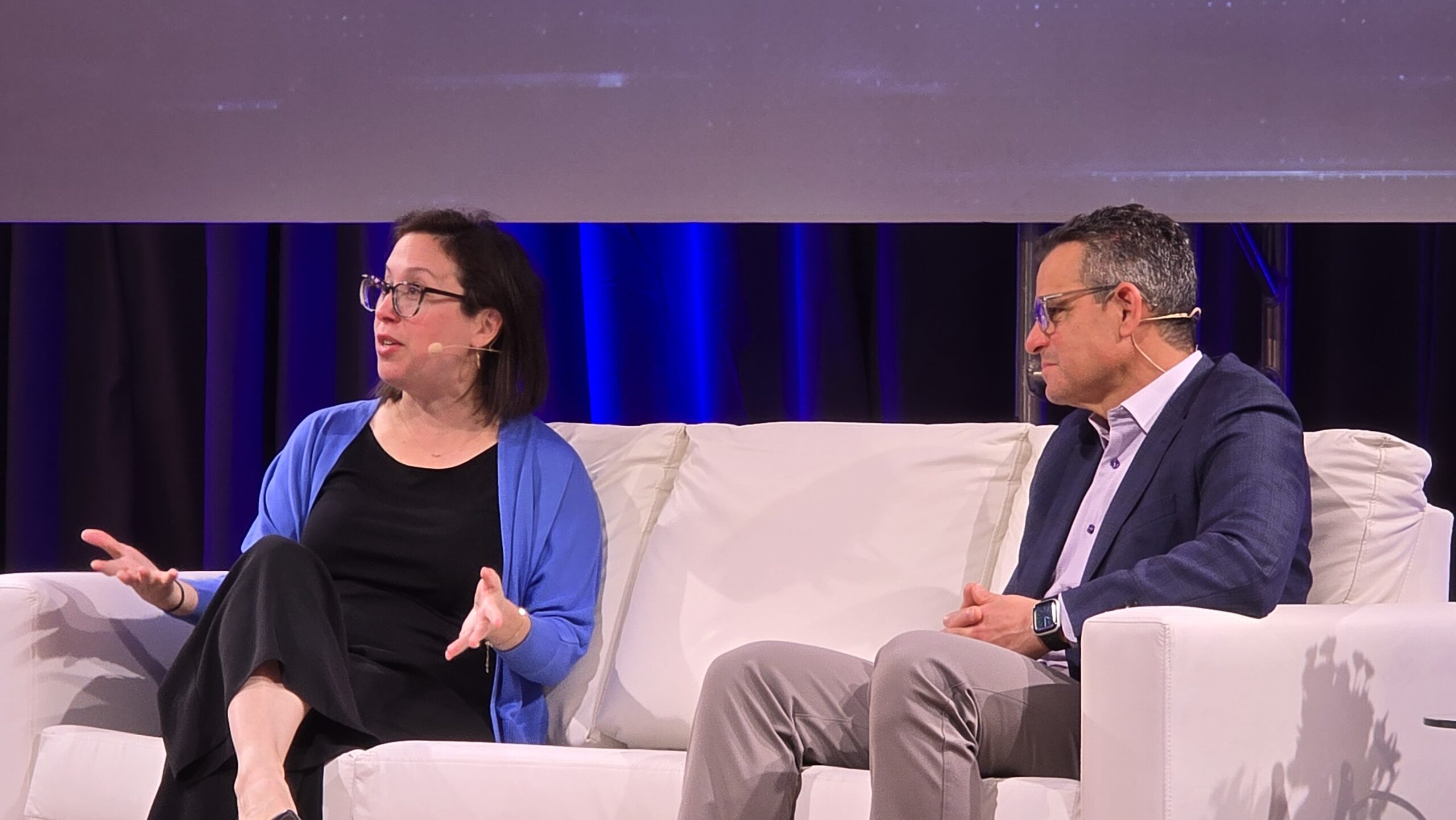
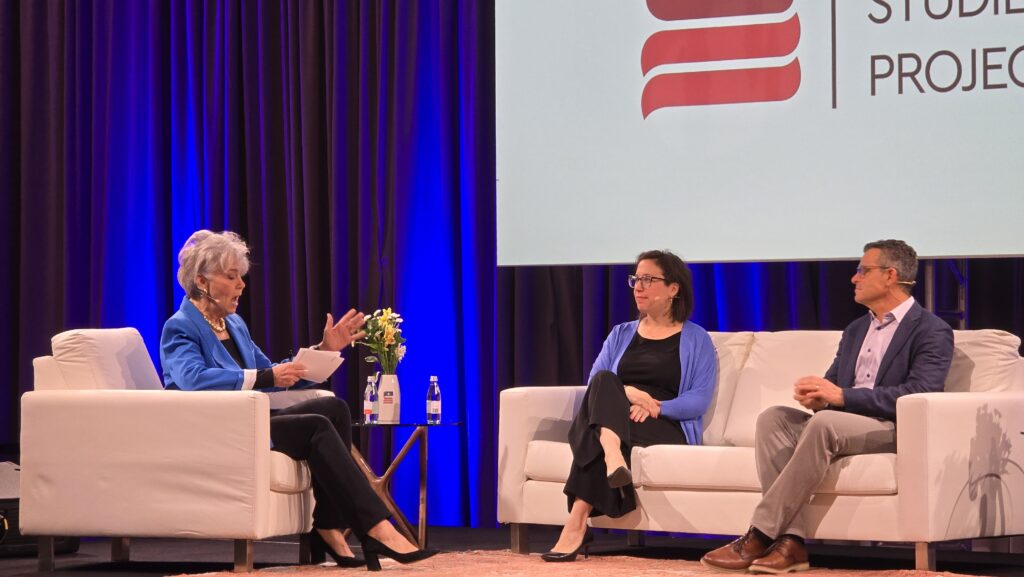
The technological landscape is shifting beneath our feet, moving from a period of digital assistance to an era of Agentic AI, systems capable of not just processing information, but executing complex goals with minimal human intervention. At the recent Special Competitive Studies Project (SCSP) session, “AI and The Future of Global Security,” the conversation transcended the usual buzzwords. Moderated by Jeanne Meserve, the panel featured Sasha Baker (Head of National Security Policy, OpenAI) and David Cohen (Former Deputy Director, CIA), offering a rare look at how the world’s most powerful institutions are grappling with the silicon-led revolution.
From a technologist’s vantage point, the discussion was a masterclass in the “dual-use” dilemma. We are no longer debating whether AI will change global security; we are now calculating the velocity of that change and determining who will hold the “judgment” in a world of automated decision-making.
The Macro View: The Infrastructure of Sovereignty
The overarching theme of the summit was the realization that AI is not a “discreet” technology like a new satellite or a specific class of weaponry. Instead, it is a horizontal capability that cuts across every facet of national power. Sasha Baker noted that while previous transformations, such as the advent of precision weaponry, impacted specific operation areas, AI impacts the “entire spectrum” of work.
However, the path to integration is blocked by significant structural hurdles. For any large-scale organization, and specifically for the national security community, the primary inhibitors are compute and data fragmentation.
- The Compute Gap: Modern AI models require staggering amounts of localized compute power to run on secure, classified networks. The panel highlighted that while cloud service providers offer massive scale, certain mission-critical data sets are too sensitive for public-facing infrastructure. This creates a bottleneck where the hardware simply cannot keep up with the software’s potential.
- The Data Paradox: Organizations often sit on “mountains of data,” but that data is frequently trapped in legacy silos that don’t communicate. For an AI to be effective, it needs to ingest diverse data streams to provide context. Without a unified data fabric, even the most advanced model remains a “brain in a vat,” unable to perceive the full operational picture.
The Micro View: The Workforce and the “Iceberg Under the Water”
Perhaps the most insightful part of the discussion focused on the human element. We are approaching a generational hand-off where “digital natives” are entering the workforce. These are individuals who have grown up with LLMs at their fingertips. While this brings comfort with the technology, it also introduces a massive vulnerability: the temptation to believe the model.
Sasha Baker described this as the “iceberg under the water.” When a model speaks with absolute confidence, there is a natural human tendency to defer to its output. In a national security context, where the stakes involve human lives and global stability, a “confident hallucination” isn’t just a technical glitch, it’s a strategic risk.
David Cohen emphasized that the mission now is to train a generation of “consumers” of intelligence. These leaders must be equipped with the wisdom to recognize when a model is “spectacularly wrong.” The goal is not to replace the human analyst, but to evolve their role from data gatherers to verifiers of automated insights.
Notable Insights from the Panel
“When you think about the potential for AI transformation, it really impacts the entire spectrum… from making your paperwork a little bit easier and more efficient all the way to potentially revolutionizing the targeting cycle. It’s maybe not different in nature, but it’s different in scale.” , Sasha Baker, Head of National Security, OpenAI
“We’re going to have to figure out how to train up these people to have the judgment so that as they rise through the ranks, they’re able to take the outputs of AI and apply some wisdom to what’s coming out.” , David Cohen, Former Deputy Director, CIA
“I worry a lot that we have not yet both adapted the technologies that will allow us to defend against [novel threats] and also build the resilience into our government responses and our society that will allow us to withstand them.” , Sasha Baker, Head of National Security, OpenAI
The Cyber Frontier: Defensive Neutralization
The conversation took a sharp turn into the world of cyber-security with the discussion of Project Glasswing. This initiative involves models with extraordinary capabilities to identify vulnerabilities in operating systems and browser software.
The technologist’s takeaway here is the shift toward proactive defense. Instead of waiting for an adversary to find a “zero-day” exploit, these models can “chain together” vulnerabilities to predict how an attack might occur. The panel discussed the ethical and strategic importance of keeping such high-powered models within a “trusted access program.” By giving verified cyber-defenders access to these tools before they are released to the public, organizations can patch holes before they are ever exploited.
However, this necessitates a new level of public-private partnership. The “translation” between the researchers in San Francisco, who know how to “squeeze every bit of juice” out of a model, and the end-users in the field is the most critical link in the security chain.
Facing Adversarial Innovation
While the panel avoided focusing on any single nation-state, they were candid about the reality of adversarial fast-following. In a globalized digital economy, once the “genie is out of the bottle,” advanced models can be distilled or extracted by any actor with sufficient technical skill.
The risk is twofold:
- Disinformation at Scale: Adversaries are already using AI to “supercharge” influence operations, making it increasingly difficult for societies to distinguish between organic discourse and synthetic manipulation.
- The Safety Vacuum: While leading labs are voluntarily submitting models for safety evaluations, adversarial actors operate without these guardrails. This creates an asymmetric environment where responsible actors are slowed by safety protocols while “bad actors” iterate with reckless abandon.
The Strategic Conclusion: Optimism Through Urgency
The session concluded with a pulse check on the future. Are we optimistic or pessimistic? Both panelists leaned toward optimism, but it was an optimism rooted in the necessity of a “crisis” to galvanize action.
The path forward requires a complete reimagining of the “public-private interface.” We cannot rely on historical precedents like the railroads or the space race; AI is too fast and too fluid. We need a “Maverick” approach to adoption, one that prioritizes speed, accountability, and a relentless focus on human judgment.
The “Agentic Economy” is arriving. The question is no longer whether we will use these agents to secure our future, but whether we can build the “wisdom layers” fast enough to keep them under control.
For more information, please visit the following:
Website: https://www.josephraczynski.com/
Blog: https://JTConsultingMedia.com/
Podcast: https://techsnippetstoday.buzzsprout.com
LinkedIn: https://www.linkedin.com/in/joerazz/
Leave a Reply
You must be logged in to post a comment.