
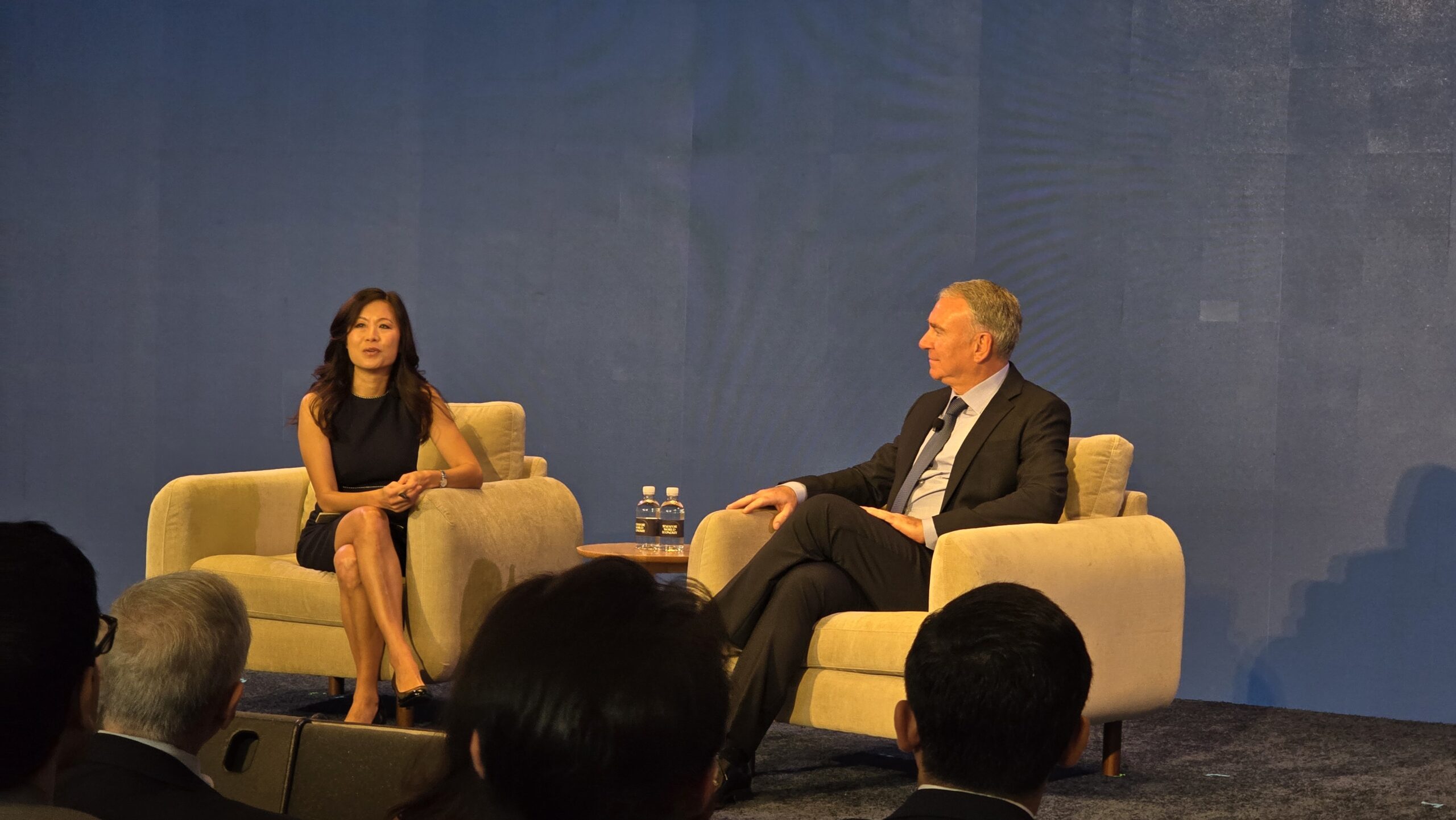
At the Semafor World Economy summit, held during the high-stakes World Bank & IMF Spring Meetings in Washington, D.C., the atmosphere was charged with a mix of fiscal caution and geopolitical anxiety. Ken Griffin, Founder and CEO of Citadel, took the stage for a candid discussion on “The Future of Global Finance.”
For a technologist or a market observer, Griffin’s insights provided a “bare-knuckle” look at how geopolitical kinetic events, specifically the escalating situation in Iran, are instantly translated into macroeconomic shifts. We aren’t just looking at a regional conflict; we are looking at a systemic energy price shock that is testing the resilience of the global financial architecture.
The Macro View: The Strait of Hormuz and Global Recession
Griffin framed the current state of the world through the lens of demand destruction. With the Strait of Hormuz effectively curtailed, the global supply of oil and natural gas is under severe duress. Griffin’s macro prediction is binary: if safe passage through the Strait is not guaranteed within the next 6 to 12 months, a global recession is unavoidable.
While he applauded the administration’s “worthy objective” of a nuclear-free Iran, he noted that the economic cost is a “treacherous moment” for central banks. We are seeing a forced acceleration of the transition to alternative fuels, wind, nuclear, and solar, not out of pure environmental policy, but out of absolute national security necessity.
The Micro View: Resilience and “Mobile Decision-Making”
On a micro-operational level, Griffin shared fascinating observations about the conflict itself that have profound implications for AI and decentralized systems. He noted that the world was caught off-guard by the grit of the Iranian military and their ability to maintain distributed decision-making under massive attack.
Technical Takeaways from the Battlespace:
- Trajectory-Shifting Missiles: Griffin highlighted that Iran has deployed a limited number of high-impact missiles capable of changing trajectory on impact, weapons designed specifically to evade the Iron Dome.
- The Counterfactual of Timing: A key theme was the “logic of now.” Griffin argued that had the U.S. waited even a few more months to strike, Iranian nuclear facilities would have been moved too deep for any conventional efficacy.
- The American Energy Hedge: From a portfolio perspective, Griffin noted that the U.S. is uniquely sheltered due to the “robust use of fuel sources” like fracking, whereas Europe (specifically Germany and Italy) remains dangerously beholden to external energy imports.
Notable Insights from Ken Griffin
“We are now in the midst of an energy crisis… a classic energy price shock unfolding across the world. It will cause economies to decelerate, and risk for recession has increased.”
“American business shouldn’t happen in Washington… Washington should be here to support the vibrancy and success of American business with thoughtful regulatory policies and a willingness to keep their hands off.”
“AI leaves everybody anxious. What do I make of my future earnings prospects when I keep reading the newspaper that AI is going to take my job away? This is a moment in time when people just feel a lot of stress.”
The “American Brand” and the Solar System Pivot
One of the most “clever” metaphors Griffin used involved the shifting of geopolitical “solar systems.” He described Venezuela as a planet that had been in orbit around China for years, only to “change solar systems” overnight into the U.S. orbit. This, he argued, was a remarkable success for the American brand.
However, he was critical of the administration’s messaging regarding Iran. He argued that the U.S. failed to bring its European allies on board effectively, creating a fragmented front rather than a united moral imperative. He reminded the audience of the “duck and cover” drills of his youth, emphasizing that the current generation has lost the visceral understanding of what it means to live in a world with nuclear proliferation.
The Federal Reserve and “Independence”
The conversation inevitably turned to the nomination of Kevin Warsh as the next Fed Chair. Griffin, a staunch supporter of Fed independence, argued that the job of the Fed is to be the “preventive benefit”, the doctor no one likes to visit but everyone needs.
The Warsh Mandate: Griffin believes Warsh is well-versed in the theory required to balance the “intrinsic tension” between the labor market and inflation. He warned against the “jawboning” of the Fed by the White House, stating that putting the “inflation genie back in the bottle” requires painful decisions, including potential job losses, that must be made without political interference.
Final Takeaway: Retribution and Responsibility
In a final, provocative turn, Griffin addressed the “fear of retribution” in Washington. He quipped that a presidential tweet “does not hurt that much” and that he prefers to frame them. He contrastingly described the “retribution” he faced under the Obama administration, IRS audits and TARP exclusions, as far more damaging than any social media backlash.
For the technologist and the citizen, Griffin’s message is clear: Civic engagement is a responsibility, not a hobby. Whether through nonprofit boards or political advocacy, the leaders of American business must use their expertise to advance the country’s interests, especially in a world where the “American brand” is being tested by both AI and energy shocks.
For more information, please visit the following:
Website: https://www.josephraczynski.com/
Blog: https://JTConsultingMedia.com/
Podcast: https://techsnippetstoday.buzzsprout.com
LinkedIn: https://www.linkedin.com/in/joerazz/
Leave a Reply
You must be logged in to post a comment.