
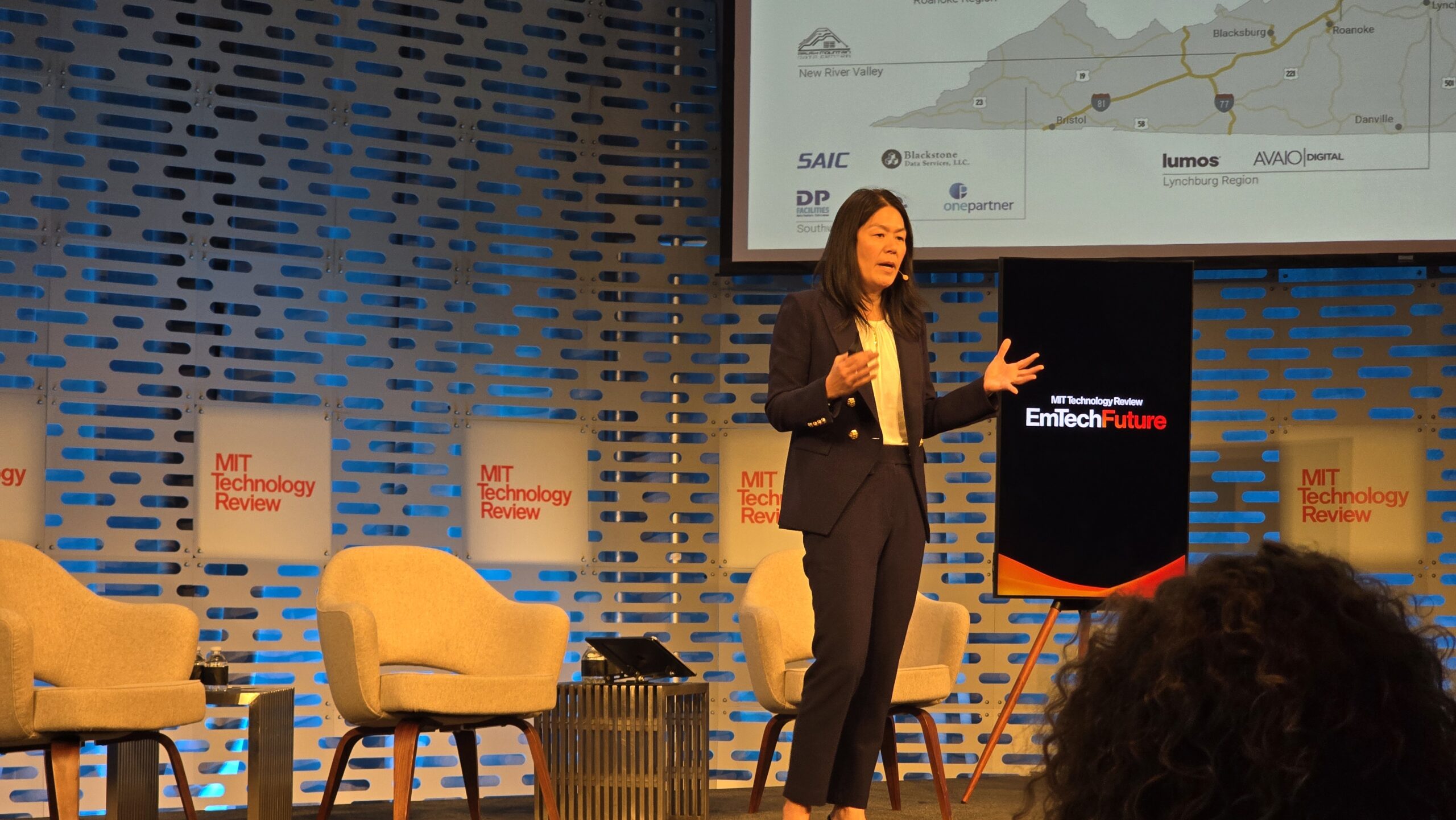
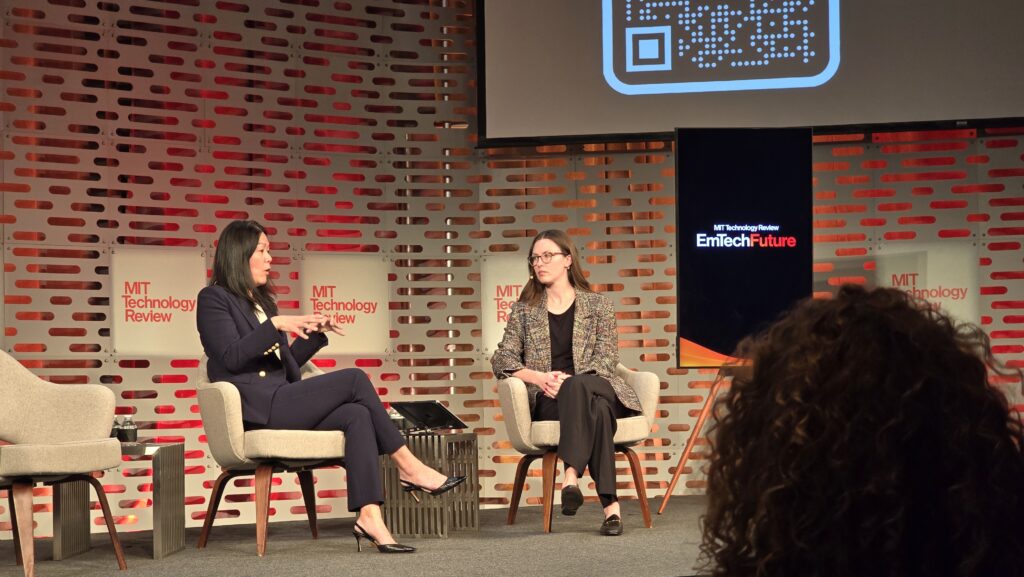
Cambridge, MA – MIT Media Lab – EmTech Future. As the world wrestles with record-shattering global temperatures, a sobering technological contradiction has taken center stage: the rapid expansion of modern artificial intelligence is running on an immense supply of fossil fuel power. In her compelling keynote address, Evelyn Wang, Vice President for Energy and Climate at MIT and former Director of ARPA-E, addressed the collision between rising digital infrastructure demand and our decarbonization targets. Introduced by MIT Technology Review’s senior climate reporter Casey Crownhart, Wang delivered an engineering roadmap showing that managing our energy future requires moving past isolated point solutions to embrace a holistic systems-of-systems philosophy.
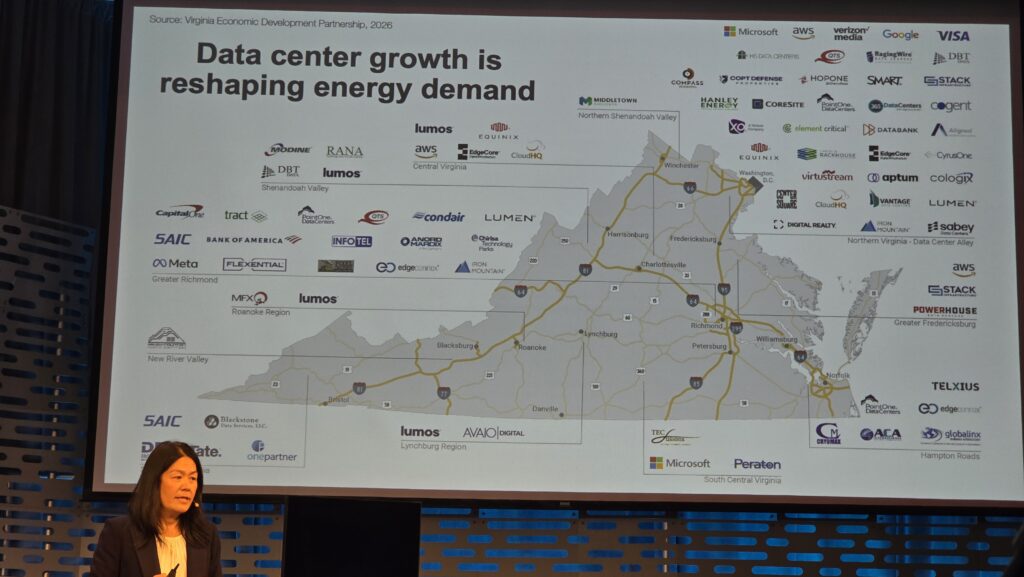
Nowhere is this stress more apparent than in data center hubs like Northern Virginia, where hyperscale computing facilities now consume roughly 25 percent of the state’s total electric capacity. If tech companies simply rely on open-cycle gas peakers to fuel this explosive growth, our broader decarbonization goals will collapse. Yet, if approached with systems-level foresight, the staggering capital expenditure driving artificial intelligence can serve as a massive market engine, financing and scaling the next generation of clean, round-the-clock baseload power technologies.
The Three Pillars of Data Center System Optimization
Rather than viewing a data center as a monolithic energy drain, Wang argued that engineers must break down and optimize every link in the physical energy supply chain:
1. Memory and Compute Co-Scheduling
While silicon design has delivered roughly 1.3 times annual improvements in raw compute efficiency, and algorithm developers deliver 3 times annual software gains, memory bandwidth is lagging far behind, advancing at less than half the pace of processing power. This creates a severe memory access bottleneck, forcing high-voltage processors to idle and waste energy waiting for data.
To counter this, MIT researchers like Christina Delimitrou have developed intelligent co-scheduling software. By analyzing overlapping code structures across parallel cloud workloads, these systems co-schedule complementary applications to maximize cache utilization, slashing latency per request by 2.7 times while doubling aggregate energy efficiency.
2. Deep Baseload via Super-Hot Geothermal
Intermittent solar and wind installations cannot provide the unbroken, nine-nines reliability that high-density computing clusters require. The computing industry desperately needs dispatchable, clean baseload power. While conventional geothermal tapping shallow aquifers is geographically limited, super-hot geothermal provides an essentially limitless alternative by drilling down five kilometers or more into the Earth’s crust to access heat exceeding 500°C.
Mechanical drill bits quickly degrade and fail under those extreme downhole pressures and temperatures. To bypass that physical limitation, MIT spinout Quaise Energy is adapting millimeter-wave gyrotron technology, originally engineered for fusion plasma heating, to melt and vaporize hard crystalline rock without physical contact. By accessing these extreme depths, a single deep geothermal well can deliver four to five times the energy output of a standard shallow geothermal bore.
3. Thermochemical Thermal Harvesting
A computer is fundamentally a machine that transforms electrical energy into computational work and low-grade heat. Every single watt delivered to a GPU emerges as thermal exhaust. Modern direct-to-chip liquid cooling systems reject this energy as heated water streams around 60°C. Typically, this heat is vented into the atmosphere.
MIT mechanical engineering professor Evelyn Wang highlighted work by Professor Loan Ken that treats this low-grade thermal exhaust as a valuable municipal resource. Transferring heated water over long pipeline distances causes massive thermodynamic energy loss.
To solve this, MIT researchers engineered reversible thermochemical adsorbent systems. Waste heat is stored as chemical potential energy within stable materials at room temperature, allowing the energy to be transported over standard road or rail networks without thermal decay. Once on-site, the chemical reaction is reversed, supplying emissions-free municipal heating, chilling, or industrial water desalination to neighboring communities.
De-Risking the Five Frontiers of Global Decarbonization
Reflecting on her tenure directing ARPA-E, Wang stressed that private venture capital cannot shoulder deep technological risk on its own. Private capital naturally gravitates toward safe, incremental software cycles. The early valley of death, spanning foundational physics proof-of-concept to pilot-scale commercial viability, requires sustained, non-dilutive government backing.
Wang outlined five systemic frontier sectors where MIT is prioritizing deep tech resources:
- Resilient Port Infrastructure: Electrifying high-emissions maritime terminals and managing multi-modal transit transitions.
- Next-Generation Agriculture: Deploying biological and precision engineering innovations to slash food production emissions.
- Coastal Ecosystem Defense: Developing adaptive civil engineering frameworks for rising sea levels and storm surges.
- Super Pollutant Mitigation: Eliminating high-potency non-CO2 greenhouse drivers, including fugitive methane and nitrous oxide.
- Geologic Hydrogen Exploration: Unlocking natural underground hydrogen formations stimulated through iron-rich deep rock serpentinization.
Key Takeaways
- The Systems-of-Systems Imperative: Modern climate infrastructure cannot be solved by isolated technologies; computing facilities, thermal loads, municipal utilities, and water networks must be designed as mutually reinforcing systems.
- The Silicon Memory Wall: Compute efficiency gains are heavily bottlenecked by lagging memory bandwidth, making software cache co-scheduling an urgent lever for saving energy.
- Contactless Deep Drilling: Millimeter-wave gyrotron drilling bypasses mechanical drill wear, tapping ubiquitous super-hot deep geothermal energy for zero-emissions baseload power.
- Chemical Heat Transport: Storing data center thermal exhaust within reversible room-temperature chemical adsorbents enables zero-loss industrial and residential heat delivery across long distances.
- Public-Private De-Risking: Federal research funding must back high-risk, game-changing physical energy technologies like geologic hydrogen and fusion to prepare them for commercial deployment.
Looking Forward
The staggering electricity draw demanded by artificial intelligence presents an urgent choice. If technology firms rely on quick-fix, fossil-fueled workarounds, the industry will inflict severe, long-term environmental damage on regional communities. Conversely, if corporate leadership channels this unprecedented capital surge into next-generation clean baseload energy, artificial intelligence could serve as the primary catalyst that permanently decarbonizes the global grid. Success requires breaking down the barriers between academic research labs, agile startups, government agencies, and industrial giants. The technologies required to power our civilization cleanly are physically viable; the true test is our collective speed in engineering them at scale.
Call to Action: Infrastructure developers and energy executives must move beyond simple Power Purchase Agreements, actively investing in on-site deep geothermal, industrial thermal recapture, and small modular nuclear architectures.
For more information, please visit the following:
Website: https://www.josephraczynski.com/
Blog: https://JTConsultingMedia.com/
Podcast: https://techsnippetstoday.buzzsprout.com
LinkedIn: https://www.linkedin.com/in/joerazz/
Leave a Reply
You must be logged in to post a comment.