
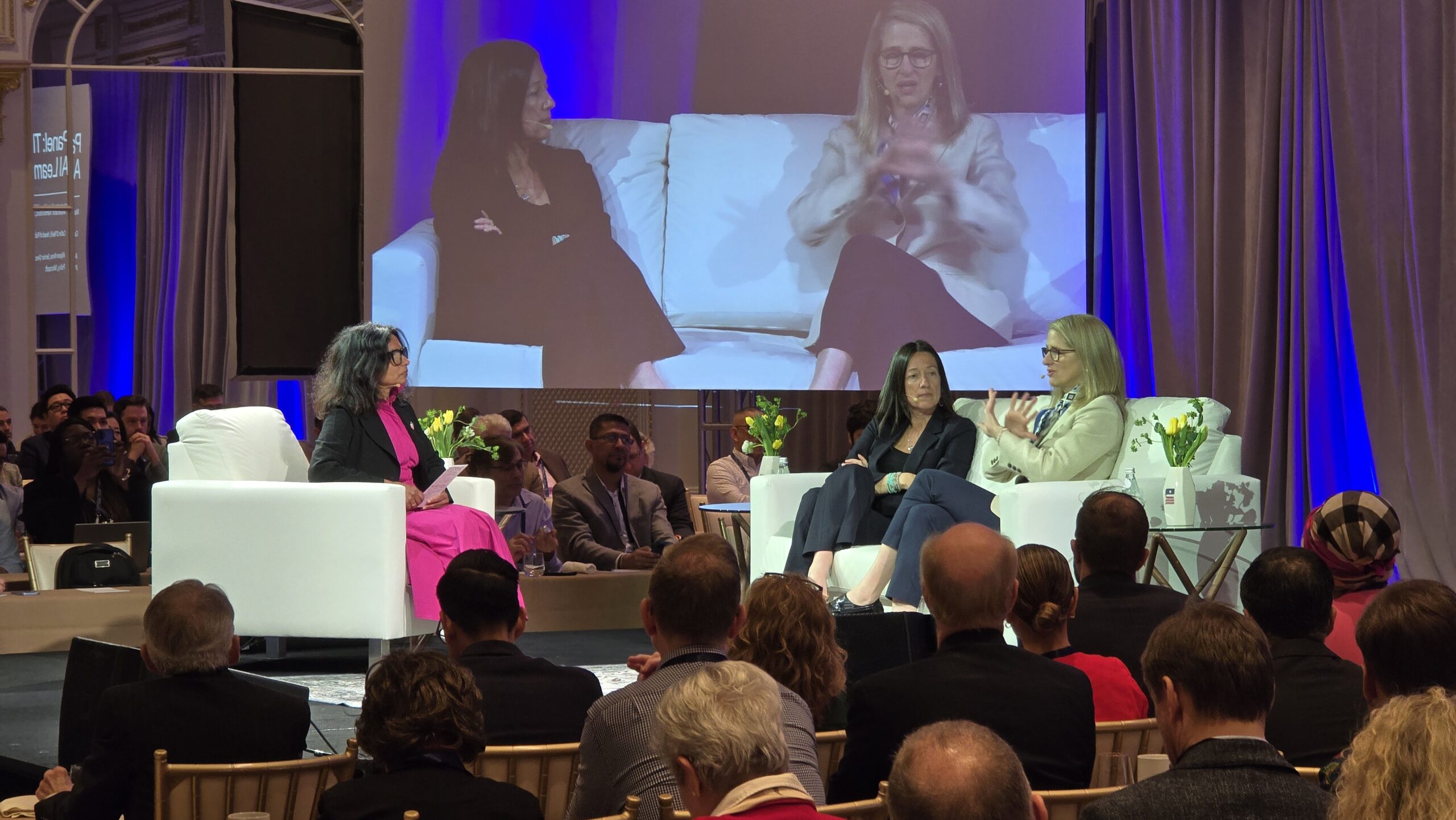
This session from the SCSP AI+Education conference offers a compelling look at how the bedrock of our labor and education systems is shifting from static credentials to dynamic capabilities. As a technologist, reading between the lines of the dialogue between LinkedIn’s Catlin O’Neill and Microsoft’s Allyson Knox reveals a clear mandate: the “Human-in-the-loop” is no longer just a safety protocol; it is the primary value proposition of the future worker.
The following recap explores the key themes of this transition, specifically focusing on the “5 Cs,” the rise of skills-based hiring, and the practical integration of AI in the classroom.
The 5 Cs: Hardening the “Soft” Skills
In a world where Large Language Models (LLMs) can draft code, summarize legal briefs, and generate marketing copy in seconds, the technical “how-to” is being commoditized. Catlin O’Neill identifies a crucial trend in LinkedIn’s data: while AI literacy is skyrocketing, it is being wrapped in a renewed emphasis on human-centric durable skills.
O’Neill introduces the 5 Cs as the necessary human framework to navigate an automated world:
- Curiosity: The drive to “learn how to learn” in an environment where tools change quarterly.
- Creativity: The ability to find novel solutions that exist outside the training data of a model.
- Courage: The willingness to make decisions and take responsibility when the AI provides an ambiguous output.
- Communication: The ability to translate AI-generated insights into human-led action.
- Collaboration: Managing both human teams and AI agents effectively.
“You need human judgment in order to know how to best use these tools,” O’Neill noted, emphasizing that as productivity growth accelerates, it is these human wrappers that ensure the output is actually useful.
From Diplomas to Data: The Shift to Skills-Based Hiring
One of the most disruptive insights from the panel is the accelerating decay of the four-year degree as a primary signal for employment. According to LinkedIn’s data, the skills required for any given job are expected to change by 25% over the next four years.
From a technologist’s perspective, this is a transition from Batch Processing (getting a degree once every 20 years) to Streaming Updates (continuous micro-credentialing).
The Infrastructure of Verification
O’Neill pointed out that less than 50% of the workforce has a college degree, yet employers traditionally fight over that small pool because degrees provide a “signal.” To bridge this gap, we need a “shared taxonomy”, a common language for what a skill actually looks like.
- The Challenge: How do you verify “critical thinking” or “AI prompt proficiency”?
- The Solution: LinkedIn and Microsoft are moving toward verification tools and “360-degree reviews” of skills, where an applicant doesn’t just claim a skill but demonstrates it through artifacts and simulations.
AI in the Trenches: The Agriculture Science Case Study
Allyson Knox provided a powerful antidote to the fear that AI will replace teachers. By interviewing educators across 15 states, she highlighted how AI can drive “deeper critical thinking” rather than just providing shortcuts.
She shared the story of Britney, an Ag-Science teacher in rural Virginia. In her classroom, AI isn’t a chatbot; it’s a diagnostic tool.
- The Workflow: Students use soil sensors (IoT) that feed data into their laptops.
- The AI Layer: Students build an AI model by feeding it images of nutrient-deficient plants.
- The Result: The students take photos of their own crops, compare them against their custom model, and determine the exact fertilizer needed.
“There is AI literacy… but also better pedagogy,” Knox explained. This isn’t about replacing the teacher; it’s about the teacher using AI to move the student from passive memorization to active, data-driven problem-solving.
The Technologist’s Take: Managing the “Agentic” Workforce
As we look toward the future, Knox and O’Neill touched on the rise of “AI Agents”, autonomous or semi-autonomous programs that can perform tasks. This introduces a new managerial skill: Agent Supervision.
Soon, an entry-level employee might not be “doing” the work in the traditional sense, but managing a fleet of three or four agents that are drafting, researching, and coding. This requires a “high-order level” of thinking. As Knox mentioned, even Microsoft is now hiring specifically for the “love of learning” rather than a specific static toolset.
Governance and Safety
Finally, the panel touched on the “guardrails” necessary for this evolution. In the K-12 system, safety is paramount. Knox highlighted that Microsoft and other leaders are committed to “safety-by-design,” ensuring that student data isn’t used to train public models and that there is a clear “opt-in” for innovative districts.
Conclusion: A New Era of Entrepreneurship
Perhaps the most inspiring anecdote was O’Neill’s encounter with a high school junior who identified as a “Founder.” By lowering the barrier to technical execution, AI is unlocking an “entrepreneurial spirit” in the next generation. They aren’t waiting for a degree to build; they are using AI to bridge the gap between their curiosity and a finished product.
For policy-makers and educators, the message is clear: The goal is no longer to compete with the machine, but to be the person who knows what the machine should do next.
For more information, please visit the following:
Website: https://www.josephraczynski.com/
Blog: https://JTConsultingMedia.com/
Podcast: https://techsnippetstoday.buzzsprout.com
LinkedIn: https://www.linkedin.com/in/joerazz/
Leave a Reply
You must be logged in to post a comment.