
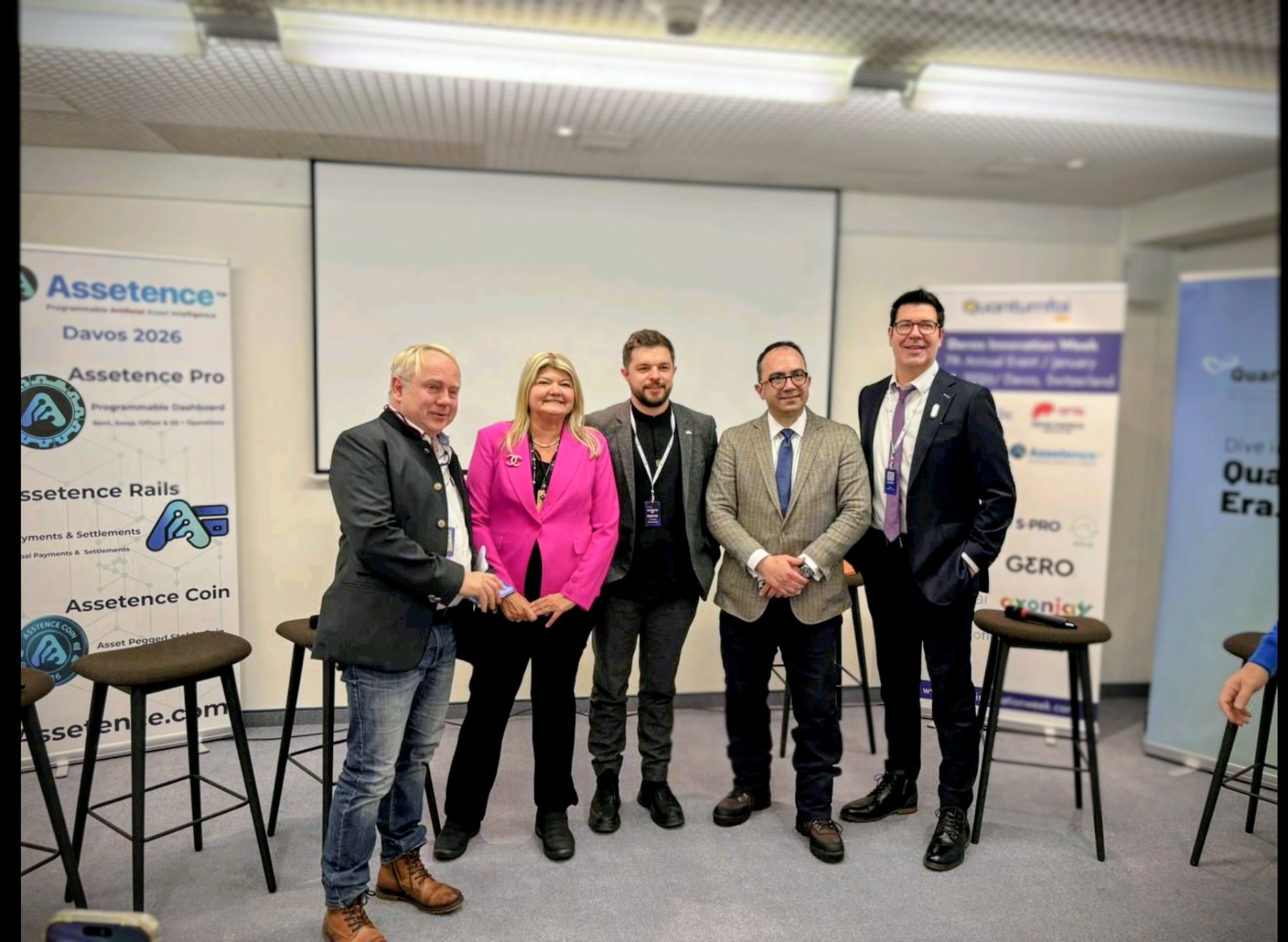
Davos, Switzerland: QuantumFAI Conference
The panel on “Blockchain AI for Trusted Identity, Data Integrity, and Smarter Finance” provided a compelling look into the practical convergence of two of the most transformative technologies of our time. Moderated by Guido Schmitz-Krummacher, the discussion featured insights from Sandy Carter of Unstoppable, futurist Joseph Raczynski, Panos Skliamis of SPIN Analytics, and Michael Barskyi of S-Pro Switzerland.
From a technologist’s standpoint, the panel moved beyond abstract concepts to articulate a clear vision of how this synergy is solving real-world problems, fundamentally reshaping identity, finance, and trust.
The Core Architecture: A “Provable Brain” The central technological thesis of the panel was elegantly summarized by Michael Barskyi: “I call it for me, blockchain is a proof, AI is a brain. So, it’s like a provable brain, which gives and kind of validates that you are the person who you are”. This analogy serves as the foundational architecture for the entire discussion.
Blockchain as Proof: The blockchain acts as an immutable, decentralized, and transparent ledger. Its primary function is to provide an unalterable record of truth, whether that truth is an identity credential, a transaction, or a data point. It is the system of record that cannot be retrospectively altered, providing the “proof.”
AI as the Brain: Artificial intelligence provides the system’s cognitive capabilities. It analyzes data, makes decisions, automates processes, and interacts with the world. It is the “brain” that performs intelligent actions. When combined, they create a system where every action taken by the AI “brain” is recorded and verified on the blockchain “proof” layer. This creates a powerful paradigm of auditable intelligence, where trust is not based on a central authority but on transparent, verifiable data and rules.
Revolutionizing Identity: From Fax Machines to On-Chain Proof The most tangible application discussed was the overhaul of digital identity. Sandy Carter powerfully illustrated the failures of our current, fragmented systems with personal anecdotes, highlighting the urgent need for a better solution. She described being unable to access her own medical records for 72 hours after an injury in Brazil and being asked to use a fax machine, which the sender claimed was “the most secure” method, to retrieve her daughter’s university credits. The solution, as Carter explained, is a self-sovereign digital identity stored on the blockchain. “Digital identity is simply taking information about yourself and placing it on chain. It enables you to have it protected and secure… so no one can see that information if you don’t want them to”.
This architecture solves several key problems:
Accessibility & Portability: Your identity credentials (birth certificate, medical records, diplomas) are globally accessible to you, the owner, at all times.
Ownership & Control: You control who can see your data, moving away from a model where institutions hold your information hostage.
Verifiability: The authenticity of the credential can be cryptographically verified on-chain. Perhaps the most forward-thinking concept was the extension of identity to non-human entities. Carter detailed Unstoppable’s work in creating on-chain identities for AI agents (`.agent`), digital twins (`.twin`), and robots (`.robot`) . This is not a novelty; it is a technical necessity. For an AI to act as a financial trader, it needs a wallet. For its actions to be auditable for governance and compliance, it needs a persistent, verifiable identity.
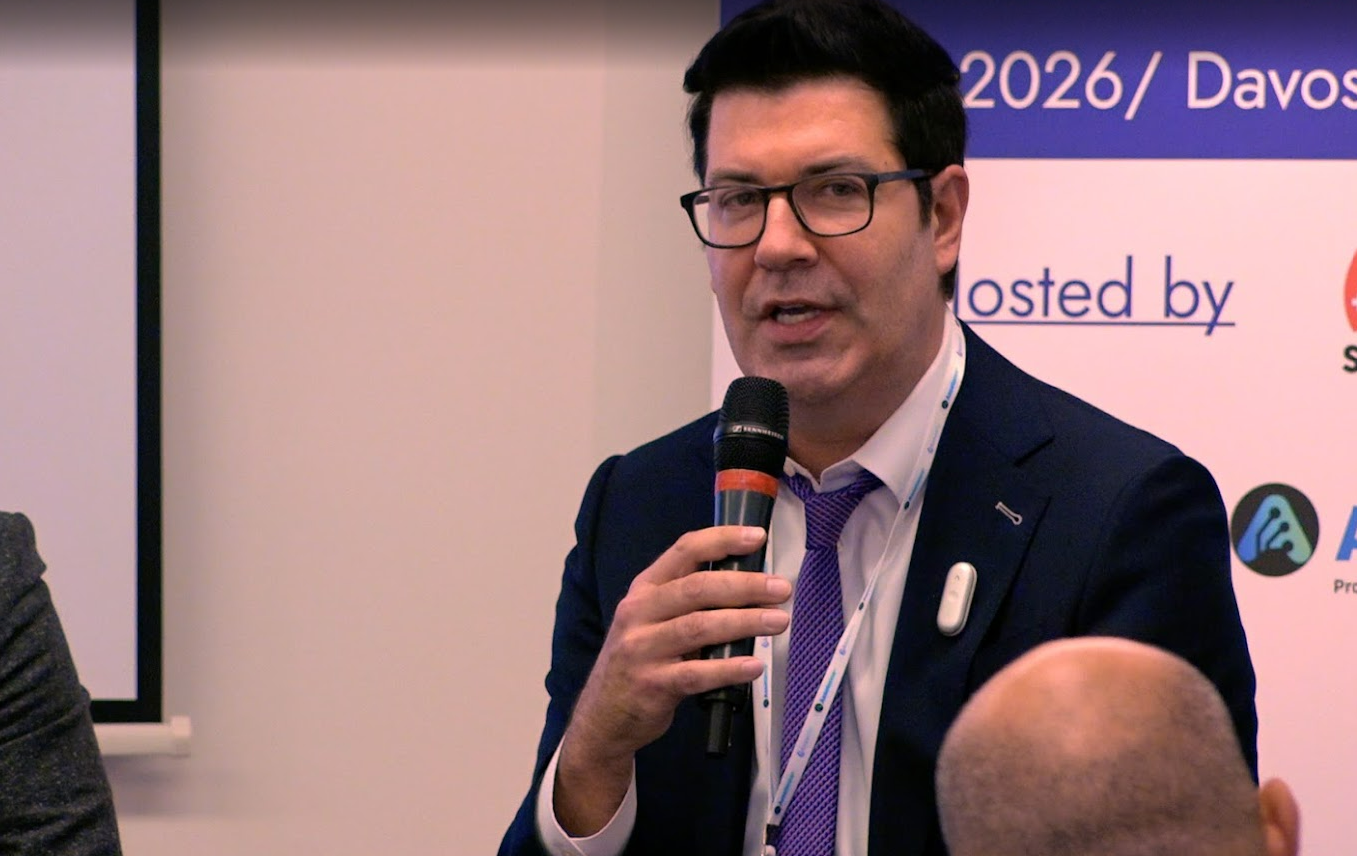
Joseph Raczynski added a critical driver for this technological shift: the existential threat of deepfakes. He noted, “Seven years ago, it took me… ten hours of recording my own voice to duplicate it. Now it takes six seconds”. In a world where anyone’s likeness and voice can be convincingly forged, a system of cryptographic proof of identity is no longer a convenience but a fundamental security requirement.
Building “Smarter Finance
The panel argued that “smarter finance” is not just about faster transactions but about creating a more efficient, accessible, and personalized system. Michael Barskyi pointed out that traditional banks are ill-equipped for this future, burdened by siloed data and costly, repetitive compliance processes like KYC re-verification, which can cost a bank “sixty million dollars or euros, plus minus just on this one specific recheck every twelve months”.
The blockchain-AI stack offers a new financial infrastructure:
Privacy-Preserving Verification with ZKPs: The discussion highlighted the importance of Zero-Knowledge Proofs (ZKPs) for building a trusted system that respects privacy. Joseph Raczynski explained the concept with a simple analogy: proving you’ve found Waldo in a picture by covering it with a piece of cardboard with a small hole, showing Waldo without revealing his location to everyone. Technologically, this means a user can prove they are over 18 without revealing their birthdate, or prove they have sufficient funds without revealing their account balance. This is a game-changer for compliance, enabling verification without data centralization.
True Accessibility through DeFi: The panel asserted that the tools for smarter finance already exist within the Decentralized Finance (DeFi) ecosystem. “You can get loans, you can borrow, you can do derivatives. You could buy stocks that are now tokenized… All that is available right now if you have a digital wallet,” Raczynski stated. The barrier is not technology but education and user experience.
Stablecoins as the Payment “Killer App”: For payments, the consensus was that stablecoins are the key to mainstream adoption. Their value is pegged to a fiat currency, eliminating the volatility that makes assets like Bitcoin impractical for daily transactions. Raczynski called them the “killer app”, enabling the original vision of cryptocurrency as a peer-to-peer electronic cash system.
The Path to Mass Adoption: Simplicity, Education, and Regulation The panelists agreed that for this technology to reach its potential, it must become invisible. Michael Barskyi argued that finance becomes smarter “when they will become simple,” drawing a parallel to how users interact with Visa or Mastercard without needing to understand the underlying payment rails.
This transition will be driven by two forces:
A Generational Shift: Sandy Carter noted that younger generations are already native to digital economies like Roblox, where they “value stuff that’s digital almost higher than real world assets”. For them, interacting with digital wallets and tokenized assets will be intuitive, not a learned behavior.
Bridging Web2 and Web3: A practical strategy for onboarding current users is to connect the new technology with familiar concepts. Carter explained how tokenizing a `.com` domain allows someone to use a known identity as a gateway into the world of crypto wallets and smarter finance. Finally, Panos Skliamis, with his background in banking, emphasized the crucial role of regulators. He argued that true mass adoption will only happen “when the regulators will say, ‘yes, now is the right time’”. He sees positive momentum in the exploration of central bank digital currencies (CBDCs) and institutional-grade blockchain infrastructure, suggesting that the “execution era” is approaching.
In conclusion, the panel painted a picture of a future where the fusion of blockchain and AI is not science fiction but a practical and necessary evolution. By providing a “provable brain,” this technological stack promises to deliver a world with truly self-sovereign identity, a more intelligent and accessible financial system, and a new foundation of digital trust built on cryptographic proof rather than fallible intermediaries.
For more information, please visit the following:
Website: https://www.josephraczynski.com/
Blog: https://JTConsultingMedia.com/
Podcast: https://techsnippetstoday.buzzsprout.com
LinkedIn: https://www.linkedin.com/in/joerazz/
Leave a Reply
You must be logged in to post a comment.