
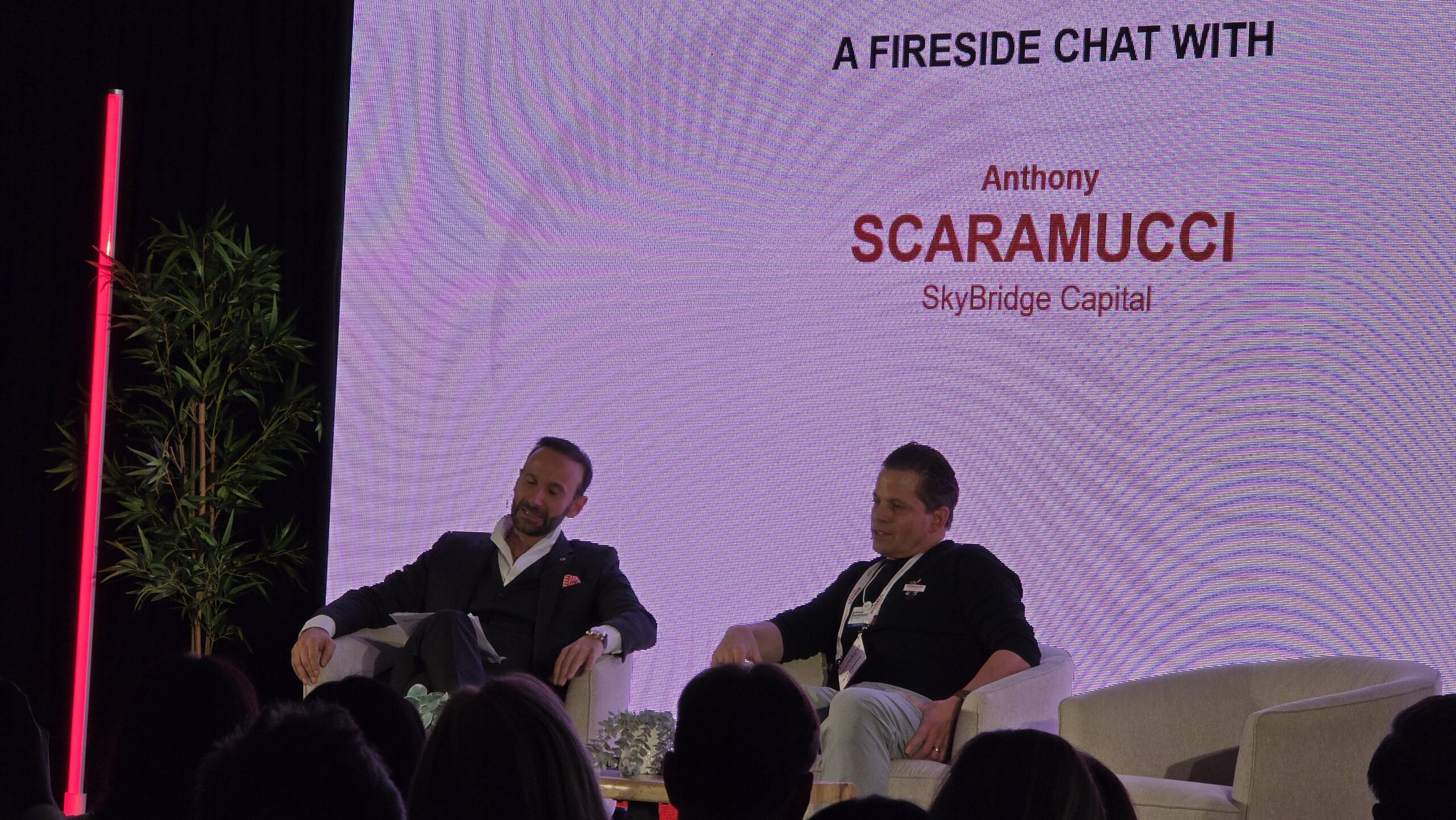
Davos, Switzerland: Monaco Day, during the World Economic Forum
You expect certain things from a talk by Anthony Scaramucci. You expect unfiltered opinions, sharp-witted analysis, and maybe a few headline-grabbing quotes about his eleven days in the Trump White House. What you might not expect is a masterclass on the systemic failures of globalization, the weaponization of media, and a diagnosis of modern politics that should serve as a stark warning to every technologist building our future.
In a session that crackled with energy, Scaramucci laid out a thesis that was as compelling as it was uncomfortable. He led with an idea that Donald Trump is not the disease; he is a symptom of a “systemic problem that has happened in the United States”. For the tech world, which prides itself on solving problems and “moving fast and breaking things,” this was a sobering look at what, exactly, has been broken.
The Unintended Consequence of Code
Scaramucci’s analysis began not in 2016, but decades earlier. He painted a picture of post-Cold War arrogance, a time when the West believed it had won. “This is the end of history,” he recalled the sentiment, “western liberalism and democratic capitalism is going to work around the world”. This belief, he argued, led directly to policies like offshoring and bringing China into the World Trade Organization.
From a technologist’s perspective, this was the ultimate scaling strategy. Enabled by the internet, sophisticated logistics, and global communication platforms, we optimized the world for efficiency. We built systems that allowed for the seamless flow of capital and goods, promising cheaper products and a more interconnected world.
But there was a bug in the code.
Scaramucci, with a disarming dose of self-recrimination, admitted his own complicity. “I was a smug, probably very self-centered, very self-assured Wall Street analyst at the time,” he confessed. “And I said, okay, well, this is ridiculous. We’re going to get lower cost of capital. We should certainly do this offshoring… And we got that wrong. We got that very, very, wrong”.
The result? A vast population, like his own blue-collar father, was left behind. “We took a very large group of people in the United States, like my dad, once economically aspirational, and we made them economically desperational”. This is the critical lesson for today’s innovators. As we build generative AI models that can write code, design products, and automate cognitive tasks, are we calculating the societal cost? The very technologies that create unprecedented wealth in coastal hubs can hollow out entire industries elsewhere. Scaramucci’s talk was a powerful reminder that every technological revolution has unintended consequences, and we ignore them at our peril.
Trump: The Ultimate Media Technologist
If economic desperation was the fuel, Scaramucci argues that Trump’s unique mastery of the modern media landscape was the spark. He urged the audience to stop viewing Trump as a traditional politician and instead see him for what he is: “the greatest reality television producer, in the history of reality television”.
This is not just a clever soundbite; it’s a fundamental insight into the new rules of power. Trump, Scaramucci explained, is an expert in attention economics. “He wants everybody’s eyeballs in this room on him. Everybody’s eyeballs”. He understands engagement metrics, virality, and narrative control better than any seasoned political operative. He hacked the system.
Scaramucci’s advice to world leaders on how to deal with Trump sounded less like diplomatic strategy and more like a user manual for a complex, unpredictable platform. He warned against being “ambushed” and made into “a b-roll actor in their reality television production”. The key, he suggested, is to “co-produce with him”, to understand the rules of his game and push back on his terms.
For technologists, this is a profound case study in the power of the platforms we’ve built. Social media, cable news, and the 24-hour information cycle have created an environment where the loudest, most controversial voice often wins. Trump didn’t just use these tools; he demonstrated an intuitive, native understanding of how to exploit them for maximum impact.
A System Reboot
So, what’s the fix? According to Scaramucci, it’s not about one election. It requires a fundamental system reboot. He pointed to two specific bugs in America’s political operating system: gerrymandering and the Citizens United Supreme Court decision.
Gerrymandering, in tech terms, is a flawed algorithm that creates political echo chambers, rewarding extremism and making compromise impossible. Citizens United is a pay-to-play API, giving those with capital disproportionate access and influence over the legislative agenda. The result is a system that serves its biggest donors, not its people.
This leads to the kind of short-term, reactive thinking that is anathema to building anything of lasting value. “The Chinese have a 100-year plan,” Scaramucci noted. “But in America, we have a cable news plan. It’s a three-minute plan”.
This is where the tech world should be listening intently. We are an industry built on long-term vision, on planning chip architectures years in advance, on training foundational models that take immense resources, on building for a future that doesn’t yet exist. The political sclerosis Scaramucci describes is not just a civic problem; it’s a threat to the very stability and long-term planning that innovation requires.
His brief, bullish prediction that Bitcoin could hit “$160,000” fits perfectly into this narrative. Whether one agrees with the valuation or not, the surging interest in decentralized, trustless systems is a direct vote of no-confidence in the centralized, legacy institutions he spent the session deconstructing. It’s a search for a new protocol.
Scaramucci’s session was a wake-up call. It was a demand that we look beyond the shiny interface of our innovations and examine the societal hardware they run on. As we stand on the cusp of an AI revolution that will dwarf the changes brought by the internet, his message is more urgent than ever. We must ask ourselves: Are we building tools that empower the many, or are we inadvertently creating the next generation of the “economically desperational”? If we fail to learn from the mistakes of the last 30 years, we may find ourselves in a future where the system isn’t just broken, but shattered.
For more information, please visit the following:
Website: https://www.josephraczynski.com/
Blog: https://JTConsultingMedia.com/
Podcast: https://techsnippetstoday.buzzsprout.com
LinkedIn: https://www.linkedin.com/in/joerazz/
Leave a Reply
You must be logged in to post a comment.